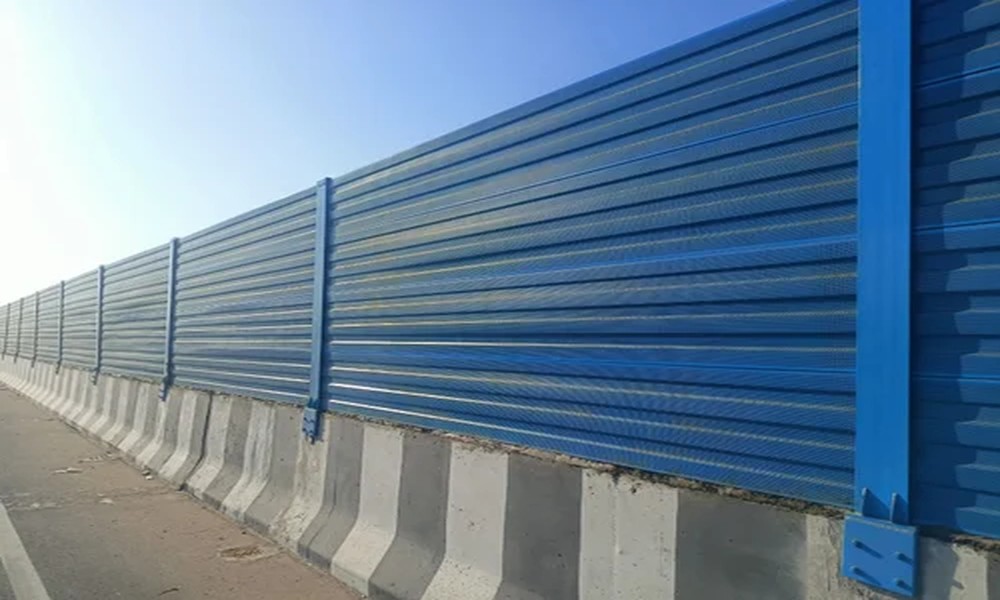
It’s easy to think that once you install noise barrier sheets, the job is mostly done.
But in reality, what happens before installation often has a bigger impact on performance than the sheets themselves.
On-site, small details like where the noise is coming from, how the space is laid out, or even what surrounds the site can change how effective the setup will be once everything is in place.
So, before installing any noise barrier system, contractors usually take a closer look at the actual site conditions first.
Let’s walk through the key factors that tend to make the biggest difference.
Where the noise is really coming from.
One of the first things to understand is the actual source of noise.
It sounds obvious, but on a busy site, noise doesn’t come from just one place.
You might have:
- Continuous noise from generators
- Intermittent bursts from drilling or cutting
- Movement-related noise from vehicles and materials
If these sources aren’t mapped out properly, a noise barrier sheet might end up too far from where it’s actually needed.
And once sound has already spread across the site, it becomes much harder to control at the boundary.
Distance between the site and the surrounding areas.
How close the site is to nearby buildings plays a big role in how well barrier sheets perform.
When there’s very little distance:
- Noise reaches surrounding areas faster
- There’s less space for sound to weaken naturally
- Barriers need to work harder to reduce impact
On tighter sites, this often means:
- More complete coverage
- Fewer gaps in installation
- Better positioning relative to noise sources
So distance isn’t just a layout detail-it directly affects how much work the barrier needs to do.
The layout of the site itself.
Every construction site has its own layout, and that layout influences how sound moves.
Things like:
- Narrow corridors between structures
- Open spaces where sound can travel freely
- Obstructions that block or redirect noise
all affect performance.
A noise barrier system that works in an open site may behave very differently in a confined one.
That’s why installation plans usually consider how sound will move within the actual space, not just where the site boundary is.
Surrounding buildings and surfaces.
Nearby structures don’t just sit there-they interact with sound.
In urban areas especially, sound can:
- Reflect off building walls
- Bounce between close surfaces
- Travel upward or around barriers
So even if a barrier is installed correctly, reflections can still carry noise to unexpected areas.
This is why noise barrier setups often need to account for what’s outside the site as much as what’s inside it.
Ground conditions and surface alignment.
This is one of those practical factors that doesn’t always get attention early, but it matters a lot.
If the ground is uneven:
- Gaps can form at the base of the barrier
- Panels may not align properly
- Sound can leak through lower sections
Even small gaps at ground level can reduce effectiveness more than expected.
So, before installing a noise barrier sheet, checking surface conditions helps avoid issues that are harder to fix later.
Height limitations and physical constraints.
In theory, taller barriers block more noise.
But in practice, height is often limited by:
- Structural stability
- Wind load considerations
- Space constraints on-site
If height can’t be increased, other adjustments may be needed, like:
- Adding layers
- Improving material quality
- Positioning sheets more strategically
So planning isn’t just about “going higher”-it’s about working within realistic limits.
Type and intensity of construction work.
Not all construction activities produce the same level of noise.
Some are relatively steady, while others are much more intense:
- Piling and demolition create high-impact noise
- Structural works produce consistent, moderate levels
- Finishing works are lower but still noticeable
A noise barrier sheet needs to match these conditions.
If planning is based only on lighter activities, the setup may struggle during peak phases.
How the site will change over time.
Construction sites don’t stay the same.
Work zones shift, equipment moves, and new phases begin.
If this isn’t considered early, the barrier setup may:
- No longer align with active areas
- Miss new noise sources
- Require constant adjustments
So planning usually includes some flexibility, so the system can adapt as the project progresses.
Access points and operational needs.
Sites still need to function.
There are entry and exit points for:
- Vehicles
- Workers
- Materials
These openings can interrupt barrier continuity.
If not planned properly, they can become weak points where noise escapes easily.
So before installing a noise barrier sheet, it’s important to think about how access will work without compromising performance too much.
Final Thoughts
Installing noise barrier sheets isn’t just about putting panels in place-it’s about understanding the environment they’re going into.
Site conditions like:
All play a role in how effective the system will be.
When these factors are considered early, a noise barrier sheet setup is much more likely to perform well in real conditions, not just in theory.